Last updated: September 10, 2026
Key Takeaways
- The loss involved asbestos or suspected mold behind walls.
- I would skip anyone who only offers basic extraction or says they can “sanitize” everything in place.
- A fast response matters, but process matters more.
- A sewage backup cleanup service should win on containment and documentation, not just on being first to answer the phone.
Quick answer: for sewage backup cleanup services: what to look before you book, I would start with three numbers — 24/7 dispatch, Category 3 contamination, and written moisture readings before sign-off. If sewage is in your basement, a sewage backup cleanup service that can isolate the damage, remove contaminated material, and dry the space fast without guessing is usually the safest place to start. I write about remediation and contractor vetting, so I know the difference between a water-damage crew, a general cleaner, and a company that is actually set up for Category 3 contamination.
Not a luxury. Not here. You are not shopping for a “deep clean.” You are choosing who gets access to your home, your HVAC, and often your insurance claim. So the real question is not “Who is cheapest?” It is: who can document safe sewage remediation, handle the structure, and avoid making the damage spread?
Need the shortest version? Book a sewage backup cleanup service that can show IICRC S500/S520-based procedures, 24/7 dispatch, source-water containment, negative-air or HEPA filtration where appropriate, moisture mapping, odor control, and written documentation for insurance. I would skip anyone who only offers basic extraction or says they can “sanitize” everything in place.
What matters more than a fast arrival time?
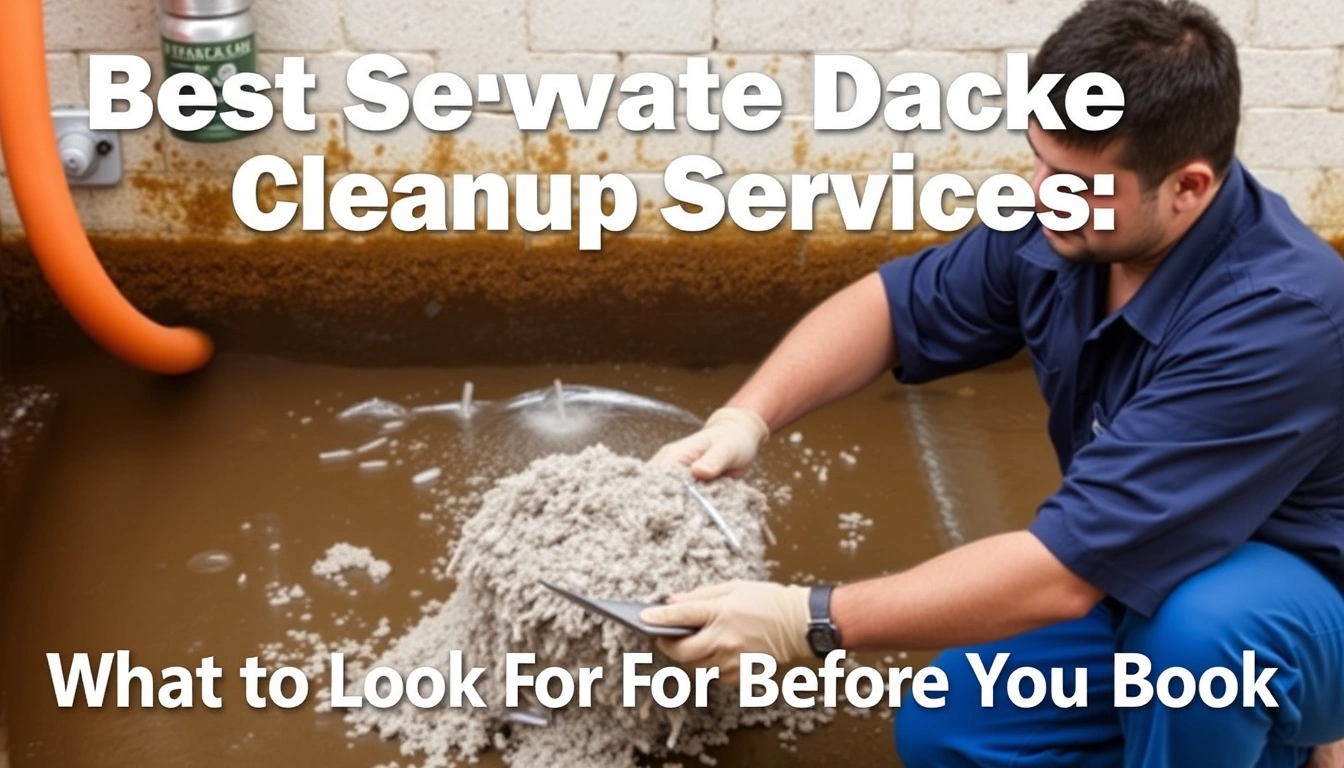
A quick arrival matters, sure. But process beats speed. A sewage backup cleanup service should win on containment and documentation, not just on being first to answer the phone. If a company cannot explain how it separates contaminated material from salvageable material, I would treat that as a warning sign and consult a remediation professional before proceeding.
The standard to ask about is the IICRC S500 for water damage restoration and IICRC S520 if the loss includes microbial growth concerns. IICRC is the Institute of Inspection, Cleaning and Restoration Certification, and those standards are what serious restoration firms use as their playbook. A company does not need to advertise every standard to be competent, but if it cannot discuss them in plain language, it is probably not the right fit for a sewer backup.
Here is the hard truth: sewage cleanup is partly demolition. Drywall, insulation, carpet pad, and porous contents often need to come out because contaminated source water does not “clean out” of every material. That is where weak companies get sloppy. They try to save too much, and the odor or hidden contamination lingers like a bad guest.
I would choose a service that gives you a written scope before work starts, even if it is rough and revised later. That scope should say what will be removed, what will be cleaned, what will be dried, and what will be monitored. If the company sounds vague about “seeing what we find,” it may be fine for a small overflow, but it is not the right pick for a basement drain backup or a toilet overflow that reached multiple rooms.
One more thing: ask whether they work with your insurer’s documentation needs. A good service can usually provide moisture readings, photos, and a line-item estimate in the format adjusters expect. A bad one leaves you with a spotless floor and a messy claim.
What should a sewage cleanup company be able to show you?
Before anyone opens a wall, the company should be able to show licensing, insurance, and a clear cleanup plan. That is the baseline. If they hesitate on those three items, I would move on.
The credentials that matter most are practical, not decorative:
- IICRC-certified technicians or equivalent training in water damage restoration.
- General liability and workers’ compensation coverage.
- A procedure for Category 3 water losses, which is the industry term for grossly contaminated water, including sewage.
- Written documentation of contents handling, structural drying, and post-cleanup verification.
I would also ask what they do after extraction. The answer should not stop at “we disinfect.” A real restoration company can explain how it decides what gets removed, what gets HEPA vacuumed, what gets cleaned with EPA-registered products, and what gets dried with air movers and dehumidifiers. The exact equipment model matters less than the logic of the plan. For background, the EPA recommends using registered disinfectants on hard, nonporous surfaces after sewage exposure, and the CDC notes that sewage can contain bacteria, viruses, and parasites.
One useful detail: if the company offers both cleanup and rebuild, that can help coordination, but it is not automatically better. It can also create a conflict if they push demolition you do not need. A pure remediation company may be better if your insurance adjuster is strict or if you want a second opinion on scope. In 2022, U.S. homeowners insurance losses from water damage and freezing were among the largest non-catastrophe claim categories, so documentation can matter as much as drying.
Skip companies that lead with carpet cleaning and tack on restoration later. Sewage cleanup is not a steam-cleaning problem. It is a contamination, moisture, and materials-removal problem. If the company’s website spends more time on rugs than on source-water cleanup, that tells you where their muscle is.
The Real Difference Between a Remediation Firm and a General Cleaner
A remediation firm is the better choice for an actual sewage backup because it is built to remove contaminated materials and dry the structure. A general cleaner is better for final surface cleaning after the hazardous work is already done, not for the first pass.
That difference sounds small until you are standing in a basement with soaked drywall and a foul line on the studs. General cleaning companies often focus on visible cleanliness. Restoration firms focus on what cannot be seen: porous material, subfloor moisture, and trapped odor in cavities.
| Criteria | Remediation Firm | General Cleaner | Winner for sewage backup |
|---|---|---|---|
| Source-water handling | Built for Category 3 contamination | Usually not their core service | Remediation firm |
| Structural drying | Uses dehumidifiers, air movers, moisture checks | Often not included | Remediation firm |
| Removal of porous materials | Standard practice when needed | May try to clean in place | Remediation firm |
| Odor control | Addresses hidden sources | Mostly surface treatment | Remediation firm |
| Insurance paperwork | Usually familiar with adjuster documentation | Often limited | Remediation firm |
| Hard-surface final wipe-down | Can do it, but it is not the only step | Good at appearance cleaning | General cleaner for final pass |
| Speed for simple surface mess | May be more process-heavy | Can be faster for minor cleanup | General cleaner for minor non-sewage mess |
| Project scale | Handles multi-room or basement losses | Usually limited to non-structural work | Remediation firm |
The weak spot of a remediation firm is cost and coordination. If you only have a small, contained overflow on a tile floor and nothing porous was exposed, a full-service restoration company may be more than you need. In that case, I would still want sewage-capable cleanup, but I would ask for the smallest scope possible. According to the EPA, sewage should not be treated like ordinary surface dirt, because porous materials can hold contamination.
A general cleaner is the wrong choice for any loss that touched drywall, insulation, carpet pad, subfloor, or air returns. It is also the wrong choice if the backup sat for more than a short time. Once sewage is in porous material, the problem becomes much harder than surface disinfection.
How do I tell if a cleanup quote is serious or just sales talk?
A serious quote names the work, not just the hope. It should identify extraction, demolition if needed, disinfecting, drying, and disposal. If the quote is one page of vague language, I would not trust it for a sewage loss.
You want specificity around a few points:
- What is being removed? Carpet pad, baseboard, drywall, insulation, cabinetry?
- What is being dried? Subfloor, framing, concrete, crawlspace?
- What equipment will be used? Air movers, dehumidifiers, HEPA filtration, containment?
- What standard guides the job? IICRC S500 is a strong sign.
- What happens if hidden damage appears? There should be a change-order process.
One subtle issue is deodorization. Some companies overpromise with ozone or fogging. Those can have limited roles, but they are not a substitute for removing the contamination source. If a quote leans hard on “odor elimination” but barely mentions demolition or drying, I would pass.
Ask whether they document moisture with readings during the job and at the end. Moisture mapping is not a luxury; it is how a real crew knows whether the structure is actually drying. A company that cannot explain how it confirms dryness is guessing. Guessing after sewage exposure is expensive.
Also ask where the waste goes. You do not want contaminated debris sitting in your driveway for days. A professional service should have a disposal plan that fits local rules, and it should be able to tell you who is responsible for hauling, bagging, and containment. The CDC also advises keeping people away from sewage-damaged areas until cleanup is complete.
When does a sewage backup cleanup service become the wrong answer?
A sewage backup cleanup service is the wrong answer if the damage is so extensive that you need a major rebuild, not a cleanup. It is also the wrong answer if the company cannot keep contaminated material separated from salvageable areas.
Here are the cases where I would change the plan:
- The sewer backed up into multiple levels of the house. If water reached more than one floor, you may need a larger mitigation contractor and possibly structural work, not just cleanup.
- The loss involved asbestos or suspected mold behind walls. Then you may need specialists in hazardous materials, not just a standard sewage crew.
- The contamination entered HVAC or ductwork. That changes the job completely and may require duct cleaning or replacement after remediation.
- The company insists everything can stay in place. For a true sewage loss, that is usually too optimistic.
Local conditions matter here too. If your home is in a basement-heavy area, or you have a sewer ejector pump, backflow valve, or old cast-iron drain system, I would choose a company that can discuss recurrence prevention. Cleanup is only half the job if the same backup could happen again next month.
A smaller limitation: if the company is excellent at emergency mitigation but weak at rebuild, you may still need a second contractor for drywall, flooring, or cabinets. That is not a dealbreaker. It just means you should know where the service ends before you book. FEMA and local health departments also recommend quick removal of wet porous materials after sewage intrusion.
The honest side-by-side: who I would book for each kind of home
For almost any sewage backup that touched porous materials, I would book the remediation firm. I would only use a general cleaner after the contamination has already been removed or for a very small surface-only incident.
The deciding factor is not brand size; it is job shape. A basement toilet overflow that soaked carpet pad, trim, and drywall is a remediation job. A brief overflow on sealed tile with no spread is closer to a targeted cleaning job, though I would still want a company that understands sewage.
Here is the practical version:
- Choose remediation if you need removal, drying, documentation, and insurance support.
- Choose general cleaning only if the event was truly minor, fully contained, and non-porous.
- Choose neither if the company cannot explain contamination control, disposal, or moisture verification.
A good service can also explain the limits of its work. That honesty matters. I trust a company more when it says, “This part needs to come out,” than when it says, “We can save everything.” Saving everything sounds attractive, then the second round of damage shows up later.
For shopping, I would look at companies available through their own sites and major local directories, then verify they also operate in a second channel such as a national franchise page or a local service directory listing. That gives you a way to compare scope and reviews without treating one platform as the whole market, and it is still worth checking a professional referral source or your local health department before you decide.
Best sewage backup cleanup services: my final call
Choose a remediation firm if sewage touched drywall, carpet pad, insulation, subfloor, or more than one room. Choose a general cleaner only if the spill stayed on a hard, non-porous surface and the company can still document proper sanitation. Neither if the provider cannot show insurance, explain Category 3 cleanup, or give you a written scope.
That is the clearest way I can put it. A sewage backup cleanup service is usually the best fit when the job is contamination control, not just cleaning. The right crew should also give you a timeline, because drying can take 2 to 5 days for small losses and longer for crawlspaces or wall cavities.
What should I ask before I book?
Ask these four questions before you sign anything:
- Are you handling this as a sewage or Category 3 loss?
- What gets removed, and what gets dried in place?
- What standards guide your work — IICRC S500, S520, or both?
- Will you provide photos, moisture readings, and an itemized scope for insurance?
If the answers are crisp, you are probably talking to a real remediation company. If the answers drift into sales language, keep looking. In short, the best sewage backup cleanup services: what to look before you book comes down to clear scope, documented drying, and a crew that can explain the next 24 to 72 hours.
FAQ
How fast should a sewage cleanup crew arrive?
Fast enough to stop spread and start extraction the same day when possible. A 24/7 dispatch line is a good sign, but response time still depends on your area and storm conditions.
Can a sewage backup be cleaned without removing drywall?
Sometimes, but not often when porous materials were soaked or when contamination reached inside wall cavities. A qualified remediation company should decide that based on the material and the extent of exposure.
Does insurance usually cover sewage cleanup?
Often, yes, but coverage depends on the policy and the cause of the backup. I would confirm details with your insurer or agent.