Last updated: October 21, 2026
Quick Answer
The most common sewage backup causes in houses and basements are a clogged lateral line, tree roots, grease buildup, a collapsed pipe, a blocked municipal sewer, or heavy rain that overwhelms the system. If sewage is coming up through a floor drain, basement shower, or lowest fixture, the cause is often somewhere between the house and the street, not inside the fixture itself.
Sewage backup causes are usually traceable to one of a few failures in the Common Causes of Sewage Backups in Houses and Basements. If sewage is coming up through a floor drain, basement shower, or lowest fixture, the cause is often somewhere between the house and the street, not inside the fixture itself.
Key Takeaways

- Most backups start in the drainage path below the lowest level, not at the sink or toilet where the water appears.
- Tree roots, grease, and settled debris are the everyday culprits; broken pipe sections and rain surcharge are the bigger structural causes.
- A house can be the victim of a municipal sewer problem even when nothing in the home has changed.
- Some causes point to a one-time blockage, while others point to aging pipe or a line that needs repair, not just another cleaning.
- If backup patterns keep returning after a drain cleaning, the pipe itself deserves attention.
The sewage backup causes that matter most in a house
The main sewage backup causes in a house are blockages, pipe damage, and overload in the line that carries waste away. That line may be the home’s lateral line, the municipal sewer, or a shared branch tied to both. The practical question is not “Why did this toilet overflow?” but “What is stopping wastewater from moving downstream?”
A generic article often skips the difference between a temporary clog and a structural failure. A plumber or utility professional should help if the backup keeps returning. That distinction matters. A wad of wipes or grease may clear with a cleaning. A collapsed pipe or offset joint will keep backing up until the pipe is repaired. A storm sewer surcharge may affect several homes at once, while a single home’s clogged lateral line usually points to a local issue.
The causes below are the ones homeowners need to recognize because they explain the pattern. A backup after a heavy storm suggests overload. Repeated backups in the same basement drain suggest a stubborn blockage or damage in the lateral line. Slow, gurgling drains before a backup point to restriction. If the problem is only in one fixture above the basement, the cause may be local plumbing; if the lowest drain takes the hit first, the sewer path is usually involved.
For a broader overview, the hub page on sewage backup causes can sit above this guide. This article stays with the cause categories themselves and does not drift into prevention or cleanup.
How tree roots turn a small crack into a backup
Tree roots cause backups by entering pipe joints, widening tiny openings, and catching paper, grease, and solids until flow slows or stops. This is especially common in older clay, concrete, or cast-iron runs where joints are not sealed like modern plastic pipe. One root strand is enough to start the chain.
Roots are not “breaking through” a healthy, solid pipe wall from nowhere. They usually exploit a weakness: a loose joint, a hairline crack, or a shifted section. Once inside, roots grow toward moisture and nutrients. A line that once drained freely can begin to hold debris at the root mass, and after that the blockage acts like a net. That is why a backup can recur in the same place even after the line is cleared.
The pattern often looks like this: water still drains, but more slowly than before; toilets may gurgle; then the basement floor drain or lowest fixture backs up when a large volume hits the line. It can happen after routine use, not only during a storm. Root intrusion is one of the most common causes in yards with mature trees and older lateral lines.
This cause is not for every house. A newer home with short PVC runs and no nearby trees is less likely to have root intrusion, and if the backup happens only during citywide storms, roots are not the first explanation. But on a property with a 20- to 50-year-old line and repeated clogs in the same branch, roots belong high on the list.
Why grease buildup keeps coming back in kitchen-connected lines
Grease buildup causes sewage backups by narrowing the pipe opening over time until paper and solids catch on the sticky coating. The problem is most obvious in house lines that carry kitchen waste, especially where the pipe has a lower slope or a rough interior surface. Grease does not need to fill a pipe completely to create trouble.
The failure mode is simple. Hot fat leaves the sink as a liquid, then cools and hardens in the line. That coating traps food particles and soap residue. Once the pipe is tight enough, a normal flush can push waste into a partial blockage and send it back toward the house. The result is often a backup that seems to “come and go,” because the line may drain between major loads and fail when several fixtures are used close together.
A homeowner can miss this because the fixture itself looks fine. The sink may drain slowly for weeks while the basement drain takes the actual hit only when the restriction becomes severe. That is why grease-related backups are often mistaken for toilet problems. They are really a drain line capacity problem.
This cause is more likely when a household regularly sends cooking grease, pan drippings, or heavy food waste down the drain. It is less likely when the backup appears after rain or only in one fixture not connected to kitchen waste. Grease buildup is a classic cause, but it is not the only cause, and a line that repeatedly backs up after cleaning may have both grease and an underlying pipe defect.
Why a collapsed pipe is a different problem from a clog
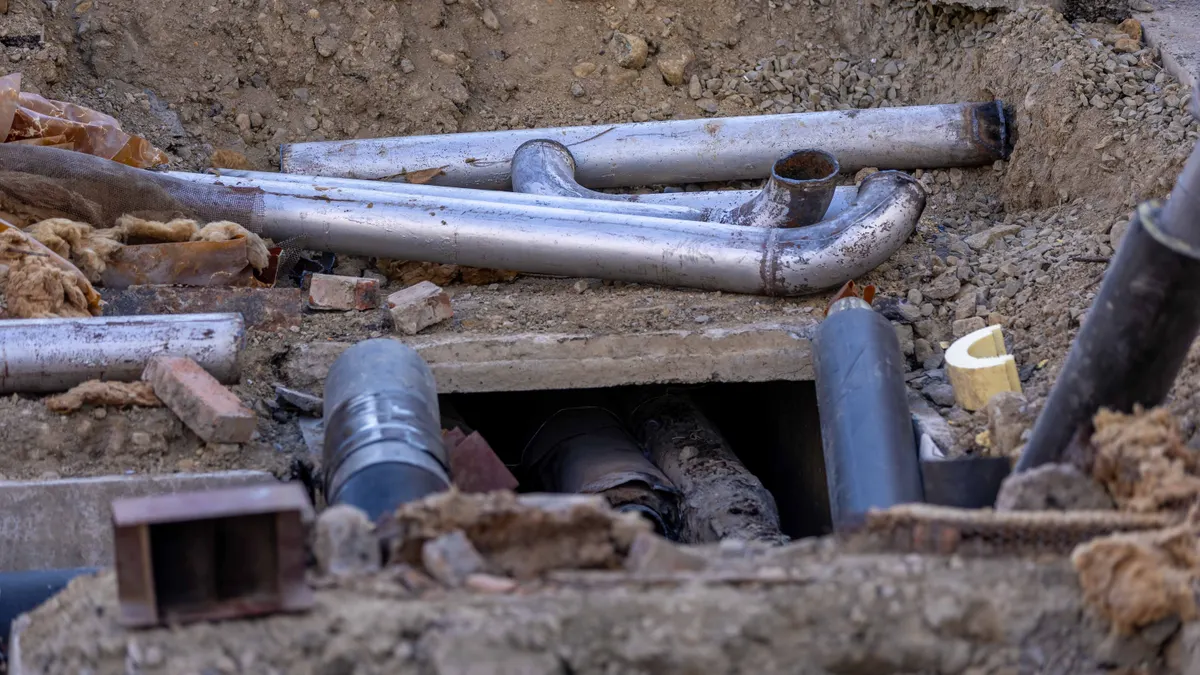
A collapsed pipe causes sewage backups because the pipe no longer has a clear channel, so waste meets a physical obstruction instead of a removable blockage. This is a structural failure, not a routine clog, and it often shows up as repeated backups that return soon after cleaning.
Collapsed pipe is a broad term. It can mean a section that has caved in, a pipe crushed by soil movement, or a line that has shifted so badly that the joint is nearly shut. A broken or bellied line can also trap waste and create the same outcome. In older homes, clay and cast-iron sections are more vulnerable to cracking, corrosion, and separation at joints. In any material, soil settlement and long-term loading can distort the line.
The clue is persistence. If a backup clears, then returns in short order, especially in the same basement drain or the same branch, the pipe may be damaged rather than merely dirty. A camera inspection is usually what identifies the issue, but the point here is the cause pattern: a collapsed pipe fails because the passage itself is compromised.
A generic article often treats all backups as if they are simple blockages. That misses the costliest category. A collapsed pipe may need repair or replacement, not another cleaning. It is the kind of cause that produces repeat calls and repeat mess because the pipe’s shape, not the debris, is the main problem.
Can heavy rain cause a sewage backup?
Yes, heavy rain can cause a sewage backup when the storm sewer or municipal sewer becomes overloaded and water pushes backward into connected lines. This is called surcharge, and it is one of the clearest reasons a basement can back up even when the house plumbing is otherwise normal.
The mechanism is straightforward. During intense rain, stormwater enters systems faster than they can carry it away. In some areas, the municipal sewer and storm sewer are separate; in others, the system may still be overwhelmed by inflow. Either way, the water level in the public line rises and can force wastewater back through low connections in homes. The basement is most vulnerable because it is the lowest point with fixtures or drains.
This cause is usually pattern-based. If several homes on the block have trouble after the same storm, the public system is a likely contributor. If the backup happens only during a wet weather event and not during dry weather use, a municipal sewer surcharge or groundwater intrusion belongs near the top of the list. Groundwater can also play a role when saturated soil puts pressure on old or damaged systems.
The important limitation is that rain does not explain every backup. A house can flood during a storm because of a blocked lateral line that just happens to fail under load. It can also back up during a rain event because a collapsed pipe or root intrusion was already narrowing the path. Heavy rain is sometimes a trigger, but it is not always the root cause.
Why the lateral line is often the real weak point
A clogged lateral line causes sewage backups by blocking the pipe that connects the house to the municipal sewer, which is why the problem often shows up in the lowest fixtures first. The lateral line is the home’s direct path to the public system, so even a partial blockage there can back waste into the house.
This section matters because many readers assume the sewer line “in the street” is the whole issue. In practice, the problem is often on the private side. The lateral line can be narrowed by grease, roots, scale, wipes, or a partial collapse. It can also be affected by a belly in the pipe, where a low spot holds water and catches solids. The homeowner sees a backup in the basement; the real bottleneck may be several feet underground between the foundation and the property line.
A useful way to think about it is this: the lateral line is the narrowest point that serves the whole house. If it is clogged, every fixture downstream is at risk. If it is damaged, the problem can seem random until the pipe is examined. This is why repeated backups in the same home often point away from isolated fixtures and toward the main path out of the house.
The lateral line is also where several causes meet. Roots can invade it, grease can coat it, and groundwater can press on weakened sections. That overlap is why a cause list for sewage backup is not just a list of possible villains; it is a map of where failures usually happen.
What cause clues help separate one problem from another
Cause clues usually come from the timing, the location, and whether the problem repeats in the same place. A backup after a 2-inch rain is not the same as a backup after a week of normal use. A floor drain that backs up every few months is not the same as a single toilet overflow. The pattern matters more than the mess.
Here is the practical sequence for reading the cause:
- Note when the backup happens. If it follows heavy rain or snowmelt, look first at surcharge, groundwater, or a public sewer overload. If it happens in dry weather, think clogged lateral line, grease, or roots.
- Note where the waste appears first. Basement floor drains, showers, and low laundry drains usually show a main-line issue before upper fixtures do. A single sink or toilet points more toward a local branch problem.
- Notice whether it repeats in the same spot. Repeated trouble in one drain or one side of the house often means the same pipe section is involved, not a one-time event.
- Think about the pipe age and material. Older clay, cast-iron, or mixed sections are more likely to have roots, corrosion, offsets, or collapse than newer PVC.
- Compare the symptom to the likely cause. Slow drainage and gurgling often fit a partial blockage. Sudden complete backup during rain fits overload or a severe restriction. A recurring backup after cleaning fits damage or a stubborn root mass.
This is not a cleanup checklist and not a prevention guide. It is a cause filter. The goal is to stop blaming the wrong thing. If a house backs up during a storm, it is easy to blame the fixture. If it backs up again after a cleaning, it is easy to blame the crew. The cause may be deeper: the lateral line, a collapsed pipe, or the municipal sewer system.
For technical context on sewer and drain work, professional standards and guidance from organizations such as the Plumbing-Heating-Cooling Contractors Association and local utility sewer departments can help, but the specific answer still depends on the pipe in front of the house.
Drafted with AI; not yet reviewed by a person.