Last updated: September 10, 2026
Key Takeaways
- Then listen and look for 5 to 10 minutes.
- Turn a ball valve 90 degrees so the handle is perpendicular to the pipe; turn a gate valve clockwise until it stops, without forcing it.
- If the first shutdown did not stop the rise within 5 to 10 minutes, I would stop treating it as a simple homeowner task and consult a licensed plumber or sewer professional.
- This helps relieve residual pressure and shows whether the shutoff held.
This article shows how to turn off water and stop a sewage backup from spreading by shutting down the right water source, checking whether the trouble is supply water or wastewater, and containing contamination quickly. Sewage coming up through a floor drain, toilet, or shower is an immediate shutoff-and-contain job in my view: stop water use right away, close the correct valve if you can reach it, and keep the mess from moving into clean rooms. So the big question is simple: is the problem inside the house, or is it coming from the main sewer line? The wrong move can make the overflow worse in minutes. Fast.
Who this is for — and who should do something else
Use this if you have a basement, slab, or first-floor backup and you can still reach the fixtures and water shutoff without standing in deep sewage. It assumes you know where your home’s main water shutoff is, can identify your toilet supply valve, and can handle a flashlight, a wrench, and a few towels without panicking. It also assumes the backup is wastewater, not just clean water from a burst supply pipe.
I would not use this approach as a DIY fix if sewage is rising from multiple fixtures at once, if the backup started right after heavy rain and keeps returning, or if the water is already near electrical outlets, a furnace, or a water heater. Those signs point to a blocked building sewer, a sewer main surcharge, or another issue that needs drain equipment and diagnostic work — not just a shutoff. In those cases, containment is still the first move, but the repair side is not a guess-and-see job.
The first split matters: clean water comes from the supply side; blackwater or sewage comes from the drainage side. Turning off the supply helps only when another fixture or appliance is feeding the mess, such as a running toilet, leaking supply line, or appliance that keeps discharging. If the waste line is blocked, shutting off household water will not stop a backup that is already being forced up from below. That is why the answer is usually “turn off the water, then stop all use, then contain.”
How do I turn off the water before a sewage backup spreads?
You turn off the correct valve in under 2 minutes, then check that no fixture can add more water to the system. The goal is to stop any extra flow into drains while you limit the spread of contaminated water that is already there. Unsure which valve controls what? Shut down the main water and call a plumber if the sewage backup keeps rising.
- Stop all water use immediately. Do not flush toilets, run sinks, start a dishwasher, or use a washing machine. Verify that no faucet is still running and that no appliance is mid-cycle. If someone else is in the house, tell them to stop within 10 seconds. Continued gurgling or a rising water level after you stop use is a bad sign; that usually points to a main drain issue, not just one active fixture.
- Shut off the nearest offending fixture first if you know it. For a toilet overflow, turn the small angle-stop valve at the wall clockwise until it stops; for a sink or appliance, close the local supply valve if there is one. Verify the fixture stops refilling. If the valve spins freely, leaks at the stem, or does not stop flow, the valve is compromised and you need the main shutoff next.
- Close the main water shutoff valve. Most homes have a main valve where the service line enters the house, often near the meter, foundation wall, or utility room. Turn a ball valve 90 degrees so the handle is perpendicular to the pipe; turn a gate valve clockwise until it stops, without forcing it. Verify that at least one cold tap inside runs dry after 10 to 20 seconds. If water still flows strongly, you may be at the wrong valve or have a second shutoff at the meter.
- Shut off the water heater if the backup involves hot water fixtures. If a sink, tub, or appliance drain is backing up and you have a gas or electric water heater, turn the appliance off so it does not keep heating a tank when demand stops. For gas, set the control to “pilot” or “off” if the manufacturer label allows it; for electric, switch off the breaker. Verify the heater stops firing or heating. No clear labels? A control you cannot identify? Leave the heater alone and stay with the main shutoff.
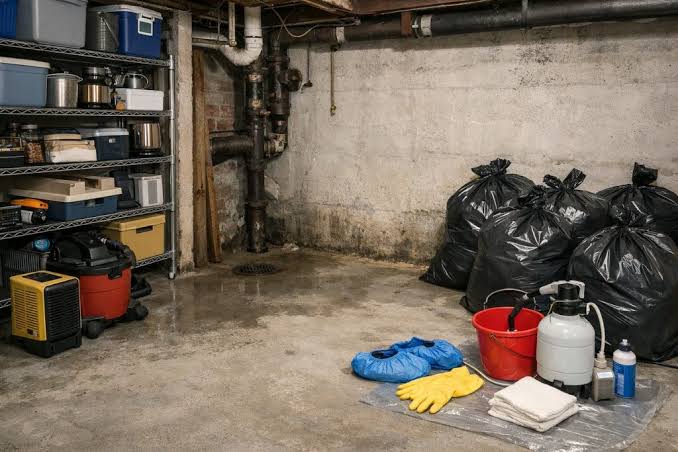
- Protect the clean side of the house. Place rolled towels, door sweeps, or a 1- to 2-inch berm of absorbent material at doorway thresholds to keep contaminated water from traveling. Verify that low spots and hallways are blocked first, because water follows the lowest path. If the water is already beneath walls or trim, the spread is beyond towel containment and drying help becomes necessary.
- Limit pressure points in the plumbing. Open one cold faucet on the lowest safe level for a few seconds after the main is closed, then close it. This helps relieve residual pressure and shows whether the shutoff held. Verify the flow stops completely. If it keeps dribbling or returns, the shutoff valve may be failing.
- Mark the source of the backup. Note whether it is a toilet, floor drain, shower, or basement fixture. If only one fixture is involved and nearby fixtures are dry, the clog may be local. If multiple lower fixtures are active, the sewer line itself is likely involved. This distinction matters because a local trap blockage and a building sewer blockage require different next steps.
- Keep contaminated water from being driven deeper. Do not hose it, do not use a wet vacuum on sewage unless it is designed for contaminated water and you know how to decontaminate it, and do not keep flushing “to see if it clears.” Verify that the water line is off and that no appliance can dump more water. If you hear a toilet tank refilling or a dishwasher drain cycle start, the backup can spread again quickly.
The practical test is plain: after shutdown, the water level should stop rising, no fixture should refill, and no new discharge should enter the drains. If any of those keep going, you are not in the clear yet.
How do I tell whether the problem is my water supply or the sewer line?
Look at what keeps moving after the shutoff: clean water from the supply side stops when the valve is closed, but sewage from the drain side can still rise because gravity and blockage are forcing it upward. A backup that appears in a floor drain, basement toilet, or shower usually points to the sewer side, not the supply side.
Here is the quickest field check I would use. First, shut off the main water. Then listen and look for 5 to 10 minutes. If the water level in the fixture drops or stops changing, the supply side may have been feeding it. If it continues to bubble, burp, or rise, the drain line is still under pressure from downstream blockage. That is what a sewer backup is: wastewater cannot get out normally and comes back toward the lowest opening. Ugly, but clear.
A local problem usually shows up as one fixture only. A toilet with a bad flapper or fill valve may overflow from its own tank. A shower trap may back up because of hair and soap scum. In those cases, a supply shutoff at the fixture or a main shutoff will stop added water, and the spill will not keep growing unless someone keeps using the house plumbing. By contrast, if flushing an upstairs toilet causes a basement floor drain to gurgle, the building sewer or branch line is likely the weak point.
This is also where the term backflow matters. Backflow is reverse movement through plumbing where water or wastewater goes the wrong direction. In a sewer event, the concern is not just dirty water on the floor; it is that the drainage system can carry contamination into places it should never reach. That is why I take a basement cleanout, floor drain, or lowest toilet seriously even when the visible amount looks small.
If you have a cleanout cap and know where it is, a rising level there is a strong sign of a main line blockage. If you do not know what a cleanout is, look for a capped 3- to 4-inch pipe at floor level or just outside the foundation. If the cap is warm, pressurized, or leaking, stop there and move to containment. Do not remove a cap unless you are ready for discharge.
What should I do in the first 15 minutes?
Isolate, contain, and document — in that order. Those first 15 minutes decide whether the damage stays at floor level or gets into walls, carpet, and electrical systems. I’d follow this sequence: water off, people out of the area, contamination contained, source identified.
If you are wondering how to turn off water and stop sewage backup from spreading, start by moving children, pets, and anyone with limited mobility out of the affected zone. Then close doors to slow spread. Use plastic sheeting, thick towels, or absorbent socks to make a temporary dike. A 1-inch barrier can matter because shallow water will follow grout lines, floor seams, and HVAC returns.
After that, kill power only if you can do it without stepping into water or crossing a wet area near outlets. If water is touching electrical equipment, call for qualified help rather than taking a risk. The same goes for gas appliances if the area smells of gas or you see scorch marks. Sewage and electricity together are not a place for improvisation.
Next, take 2 or 3 photos from a dry spot. Photograph the fixture, the spill path, and any cleanout or valve you closed. This is not busywork; it helps a plumber or restoration contractor understand whether the backup began at a toilet, shower, or floor drain and how far it spread.
If you can safely lift a toilet tank lid, check whether the fill valve is still running. A tank that keeps filling after you shut the supply valve means the valve is not actually closed. If you cannot identify the parts, do not pry or force them. Ceramic tanks crack easily, and a broken tank adds fresh water to sewage in seconds.
One more practical step: do not use chemical drain openers. On a sewer backup, they usually do nothing useful, and they can create a hazardous splash if the line is already full. Mechanical clearing or line inspection is the proper next move, not a bottle of liquid.
When should I stop and call for help?
Stop immediately when the backup is bigger than a single fixture or when the shutoff does not actually stop the flow. These situations mean the problem is beyond simple containment and into drainage failure, contamination, or safety risk.
Multiple fixtures are backing up at once: This usually means a main sewer blockage or a sewer surcharge — the public sewer is overloaded — and continuing to run water can push more sewage into the house. Stop all plumbing use and get a licensed drain or plumbing service.
Water is near outlets, a breaker panel, furnace, or sump pump: This means there is an electrical or equipment hazard. Do not step into the area to “check one more thing.” Shut off power only from a dry location if you can do it safely, then call for help.
The main shutoff valve does not close fully: A failed gate valve or seized stop can keep feeding the system. If the handle keeps turning without resistance or water still flows after closure, the valve needs repair before the problem can be controlled.
Sewage is entering through a floor drain or cleanout cap: That points to line pressure and a downstream blockage, not a local spill. Do not keep using sinks or toilets. Waiting usually means wider contamination into the basement or lowest level.
You smell gas, see a damaged appliance, or suspect a fuel source issue: That is outside the plumbing-only problem. Leave the area and get the utility or emergency response involved as appropriate.
Someone in the home is immunocompromised, very young, or has respiratory disease: Sewage aerosol and contaminated surfaces are a poor exposure for vulnerable people. Keep them away and shorten exposure time even if the spill looks modest.
If the first shutdown did not stop the rise within 5 to 10 minutes, I would stop treating it as a simple homeowner task. At that point, the right next step is diagnosis and cleanup, not more flushing, plunging, or chemical treatment, and a licensed plumber or sewer professional should be consulted.
What mistakes make sewage spread faster?
The biggest mistake is treating a sewer backup like a normal clog. That choice turns a contained problem into a house-wide contamination issue. The better move is to stop all water use first and figure out whether you are dealing with the supply side or the drain side.
- Flushing “one more time” to test it. That adds several gallons per flush and can raise the level fast in a blocked line. The better move is to leave toilets alone until the source is identified.
- Using a plunger on a floor drain or full toilet without confirming where the blockage is. This can splash contaminated water and aerosolize waste. If the line is full, plunging is the wrong tool.
- Opening a cleanout cap too soon. If the line is pressurized by a blockage, that cap can release sewage at floor level. The safer alternative is to observe first and open only when you know what you are dealing with.
- Running a shop vac on sewage without contamination planning. A vacuum can spread aerosols and turns a disposal problem into an equipment decontamination problem. Use proper extraction only if the tool is rated for the task and you can clean it afterward.
- Ignoring a slow drain before it becomes a backup. A gurgling toilet or shower often gives warning. If more than one lower fixture is slow, the building sewer may already be compromised.
- Assuming the main water shutoff solves every flood. It stops supply water, not wastewater. That is why the backup can keep spreading even after the water is off.
The better habit is simple: stop introducing water, keep the contaminated water from migrating, and do not force the drainage system to reveal itself through another flush.